

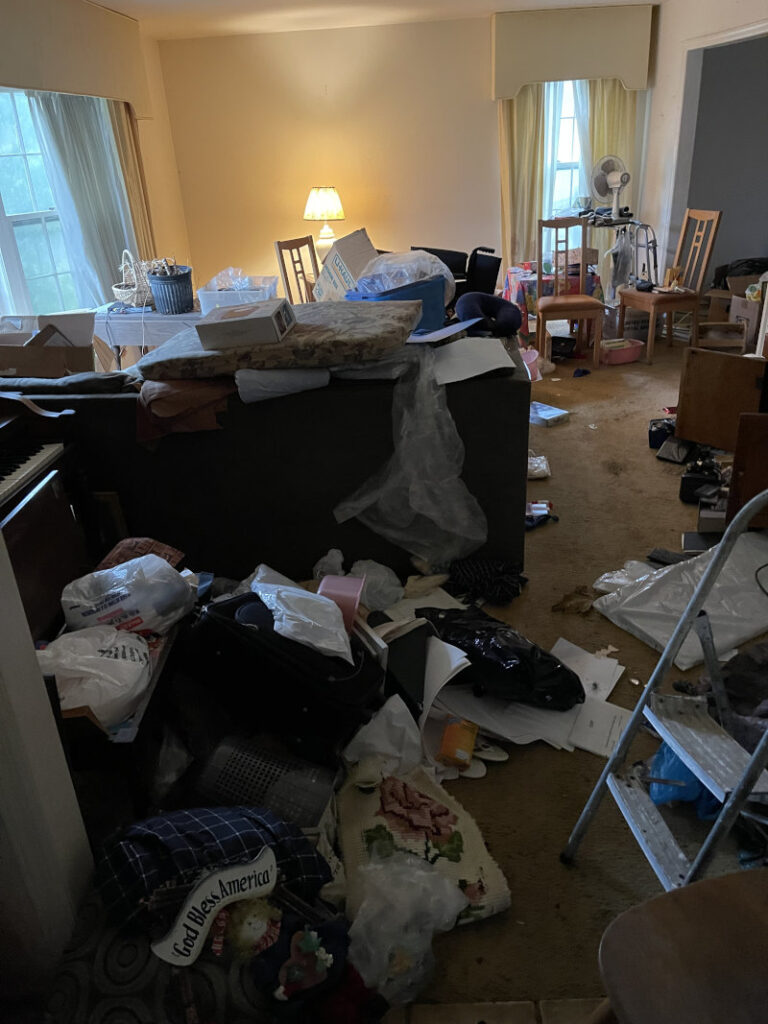
Hoarding isn’t just “too much stuff.” It’s a serious situation that can make a home unsafe to live in and emotionally overwhelming to face alone.
When rooms are packed wall-to-wall with belongings, trash, or broken items, the idea of “just cleaning it up” is unrealistic—especially in full homes and apartments in busy areas like Toms River, Brick, and Lakewood where space is tight and access is limited.
CamoVets Junk Removal provides discreet, safety-focused hoarding cleanout services across Ocean and Monmouth County. Our role is to handle the physical side of things—clearing pathways, removing items, and making the home safer—while respecting the person, their history, and the emotional weight of the process.
Hoarding Disorder: More Than Clutter
Medical and mental health organizations classify hoarding disorder as a mental health condition, not a simple housekeeping problem. It’s defined by a persistent difficulty discarding possessions, a strong urge to save items regardless of their actual value, and severe clutter that interferes with using living spaces in a normal way.
People living with hoarding disorder often experience distress at the thought of throwing things away and may avoid letting others into their home because they’re embarrassed or afraid of losing control over their belongings.
That’s why a hoarding cleanout must be handled differently than a standard junk removal job. There’s usually more volume, more emotion, and more risk.

Health and Safety Risks in a Hoarded Home
The consequences of severe hoarding go beyond inconvenience:
- Fire danger and blocked exits. Piles of paper, clothing, and other flammable materials near heat sources or wiring can drastically increase fire risk, while blocked doors and hallways make escape and firefighter access difficult.
- Falls and physical injury. Narrow paths, stacked items, and unstable piles raise the chance of tripping or being struck by falling objects, especially for older adults or anyone with mobility issues.
- Unsanitary conditions. Trash, spoiled food, and limited access to kitchens and bathrooms can lead to bacterial growth, mold, pest infestations, and poor air quality, all of which may worsen respiratory or other health problems.
- Strain on daily life and relationships. Hoarding disorder is associated with significant distress and impairment in work, social, and family functioning, and can lead to isolation, conflict, and even eviction or legal trouble.
Because of these risks, hoarding cleanouts often require protective gear, careful handling, and a structured plan, rather than a quick “tidy up” approach.
How CamoVets Handles Hoarding Cleanouts
We approach hoarding situations with three priorities: safety, respect, and steady progress.
- Safety first. Our crews arrive with appropriate personal protective equipment (PPE) and tools to work in environments that may include dust, mold, animal waste, or sharp and unstable items. We focus early on opening safe paths and reducing obvious hazards.
- Respect for the person and the home. We know every item in the home has a story, even if it looks like “junk” to someone else. When the occupant or a family member is involved, we follow their direction about what absolutely must stay, what can go, and what might be donated, and we move at a pace they can tolerate.
- Clear communication. Before we begin, we explain what we’ll do, what we won’t do, and how long things are likely to take. During the cleanout, we check in regularly so there are no surprises as rooms open up.
Depending on the situation, we can coordinate removal from a single room, an entire level, or the whole property, including garages, basements, and sheds. If there are items suitable for donation or recycling, we separate them where practical so that not everything ends up as waste.
Our Role vs. Mental Health Treatment
It’s important to be clear: CamoVets is a junk removal and cleanout company, not a mental health provider. We handle the physical clean-up and debris removal, but hoarding disorder itself is a medical and psychological condition that typically requires professional treatment.
Research-supported approaches—especially forms of cognitive behavioral therapy (CBT) tailored to hoarding—can help people gradually practice sorting, discarding, and resisting new acquisition while addressing underlying anxiety and decision-making difficulties.
If you or a loved one is dealing with hoarding disorder, organizations like the American Psychiatric Association, major health systems such as Mayo Clinic and Cleveland Clinic, and local mental health providers offer information and treatment options.
Our work can support that process by making the environment safer and more functional—often in coordination with family, care teams, or case managers.
Who We Help
Hoarding cleanouts in our local service area often involve:
- Adult children trying to help a parent whose home in a town like Toms River or Brick has gradually filled over many years
- Individuals ready (or strongly encouraged) to tackle their own space but who physically can’t manage the volume on their own
- Estates and properties that must be made safe and accessible for sale, inspection, or repairs
In each case, we keep things as private and discreet as possible. Our trucks are branded, but we don’t advertise “hoarding” on-site or draw attention to the situation.

Ready to Talk About a Hoarding Cleanout?
Reaching out for help with a hoarded home is a big step. You don’t have to have everything figured out before you call—that’s what we’re here for. We can start with a conversation, outline possible next steps, and give a realistic idea of what a cleanout would look like.
We’ll bring a calm, organized crew, the right equipment, and a respectful approach to help make a very hard situation a little easier and significantly safer.