
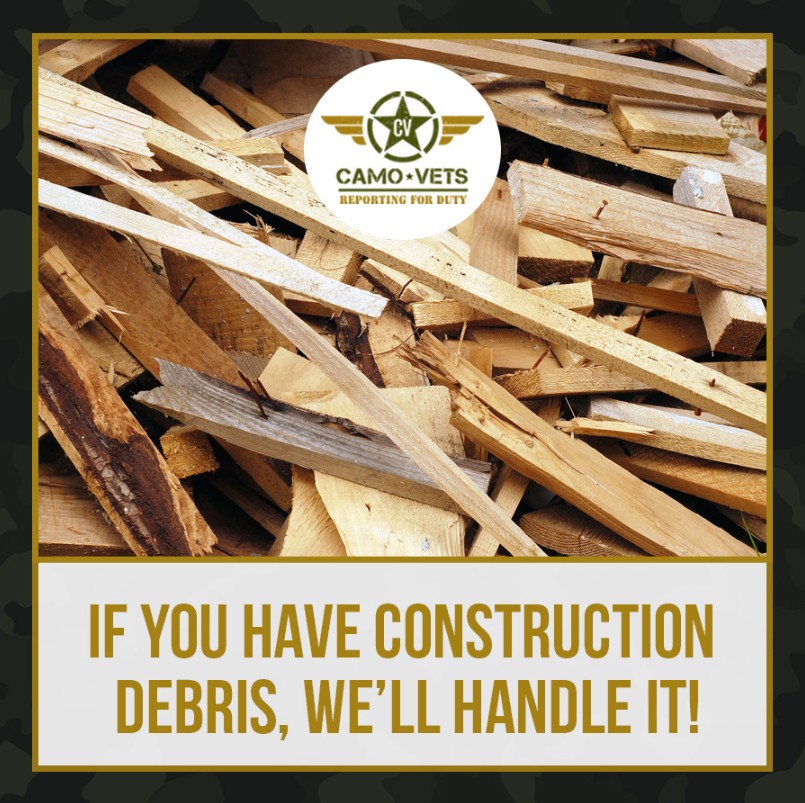
Construction projects, home remodels, storm damage, big cleanups—whatever kicked things off, they all have one thing in common: piles of debris that don’t fit in a trash can. Lumber, drywall, broken concrete, torn-out landscaping, and general junk can take over a driveway or yard fast, especially in busy areas of Ocean and Monmouth County where space is tight and local disposal rules are strict.
CamoVets Junk Removal offers debris removal for homeowners, landlords, and small contractors throughout the Jersey Shore region, so you can keep the project moving instead of tripping over what you’ve already torn out.
Why Debris Removal Matters More in New Jersey
New Jersey doesn’t treat construction and bulky waste as an afterthought. The state has comprehensive solid waste laws overseen by the New Jersey Department of Environmental Protection (NJDEP), and counties operate under detailed solid waste management plans that spell out how and where different types of material must be handled.
A few key points:
- Construction and demolition (C&D) debris is regulated.
New Jersey requires C&D waste to be disposed of or recycled at NJDEP-licensed facilities, rather than dumped wherever it’s convenient. Advantage Cleaning+1 - C&D waste is a big slice of the pie.
Nationwide, debris from construction, renovation, and especially demolition makes up about 35% of the total solid waste stream, which is why states and counties treat it seriously and push for recycling where possible. - Counties run dedicated solid waste programs.
Ocean County’s Department of Solid Waste Management runs recycling centers, special waste drop-offs, and programs spelled out in its recycling guides, while Monmouth County relies on the Monmouth County Reclamation Center and related facilities for municipal solid waste and recycling.
For a homeowner or small contractor, keeping up with all of that can be a lot. Hiring a licensed hauler that knows how to navigate local facilities and rules helps you avoid dumping problems, rejected loads, and potential fines.
What Types of Debris We Remove
CamoVets handles non-hazardous debris from a wide range of projects, including:
- Home Renovation Debris Removal & Light Remodeling
- Demolished drywall and plaster
- Old trim, doors, cabinets, and shelving
- Countertops and vanity tops (within safe handling limits)
- Flooring: tile, laminate, vinyl, carpet, and padding
- Construction Debris Removal & DIY Projects
- Framing lumber and off-cuts
- Plywood and subfloor sections
- Small amounts of roofing debris from repairs
- Bagged construction trash from jobsites
- Outdoor and Yard Project Debris Removal
- Torn-out fencing and decking (small sections)
- Yard waste mixed with other debris (non-hazardous)
- Old landscape timbers, edging, and planters
- General Bulky Waste
- Broken furniture and shelving from a remodel
- Non-working fixtures and built-ins removed during upgrades
If you’re unsure if your debris fits, describe the pile when you call—we can usually tell you right away if it’s in our wheelhouse.
Important: We do not haul hazardous materials (like asbestos, large amounts of chemicals, fuel, or certain industrial wastes). If we suspect something regulated, we’ll point you toward the right type of service for that material based on state guidelines.
How Debris Removal with CamoVets Works
1. Tell Us What You’re Dealing With
When you contact us, share:
- The type of job (bathroom gut, flooring removal, deck tear-down, etc.)
- Where the debris is staged (driveway, garage, side yard)
- Rough volume—photos are great if you have them
This helps us give you a realistic estimate and plan for the right truck space and crew.
2. Get Clear, Volume-Based Pricing
We don’t use a one-price-fits-all approach. Your cost is based on how much space your debris takes up in our truck, plus labor and disposal. That means:
- Smaller piles cost less
- Larger piles scale in a way that reflects actual volume
- No surprise line-items tacked on at the end
You’ll see the number before we start loading, so you can decide with full information.
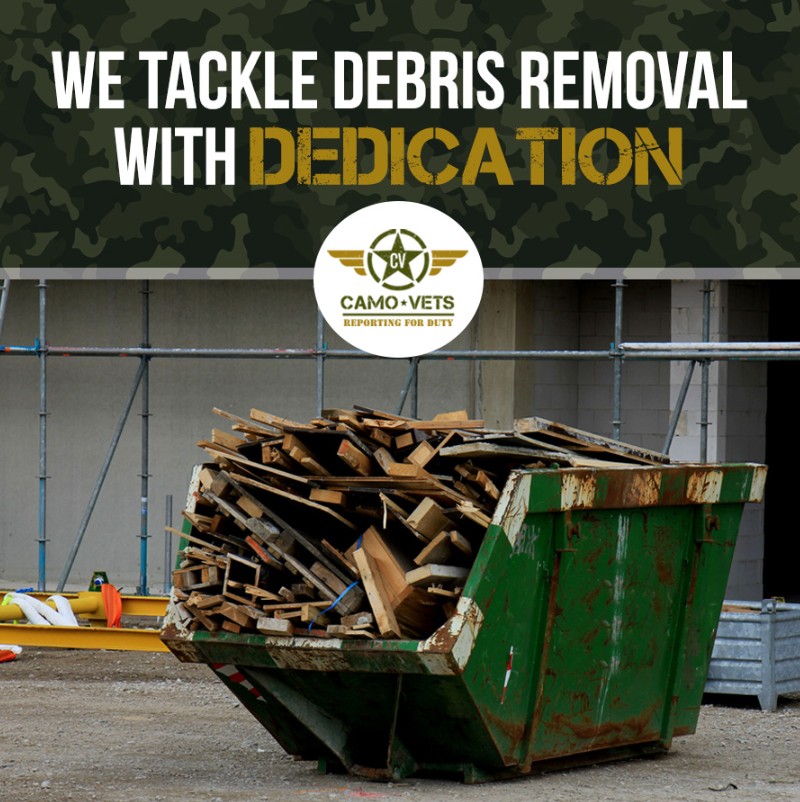
3. We Load, Haul, and Clean Up
On the scheduled day, our crew arrives within the agreed time window. We:
- Load the debris from the area you’ve designated
- Take care to protect surrounding surfaces and avoid tracking material through your property
- Sweep or rake the area once loading is finished
The result: a cleared space you can actually work in, and one less thing cluttering your project.
Who Uses Our Debris Removal Service?
Our debris removal service fits a pretty wide range of projects and people. Homeowners call us when they’re tearing out a kitchen, updating a bathroom, or opening up a basement and don’t want piles of drywall and lumber sitting in the driveway for weeks. DIYers who are comfortable doing the work themselves often draw the line at multiple trips to the dump and prefer to hand off the hauling to someone who does it every day.
We’re a great option for small contractors and trades who need jobsites cleared but would rather keep their crews focused on building, not loading trucks. Landlords and property managers use us when they’re turning over units after a long tenancy or cleaning up after a big renovation, especially when old materials and general junk are mixed together. And when estate cleanouts or major decluttering projects overlap with repairs and remodeling, we can step in to remove both construction debris and unwanted contents in one coordinated effort.
Because we’re local to the Jersey Shore and work across Ocean and Monmouth County, we’re used to tight driveways, HOA restrictions, narrow streets, and all the little quirks that come with working near the coast—so we plan your debris removal with those realities in mind.
Why Work with CamoVets?
Veteran-Founded and Locally Rooted
CamoVets is a veteran-owned business. The same habits that matter in uniform—showing up when we say we will, following procedures, and finishing the job – carry through to how we handle debris removal on your property.
Licensed Hauler, Not Just a Pickup
New Jersey’s waste regulations expect construction and bulky waste to move through licensed channels and into appropriate facilities.
We operate within that framework so you’re not relying on someone who might leave your debris where it doesn’t belong.
Straightforward Communication
No vague promises, no disappearing acts. From the first phone call to the final sweep, you’ll know:
- What we’re doing
- When we’re arriving
- What it will cost
Ready to Clear the Pile and Move to the Next Phase?
If your project in Ocean or Monmouth County has left you with a stack of debris and nowhere to put it, you don’t have to live around it or spend your own time hauling. We’ll bring the truck, the crew, and a plan that fits New Jersey’s rules—so you can look at a clean space and focus on what comes next.
Call 732-858-5598 or Contact Us to Request your New Jersey debris removal estimate
FAQ – Debris Removal in Monmouth & Ocean County
Can I just put construction debris out with my regular trash?
In most New Jersey municipalities, routine curbside collection will not take significant loads of construction and demolition debris. Local programs focus on household trash and recyclables, not bulk C&D material, which must go to appropriate facilities. See the Ocean County Recycling Guide >
That’s why homeowners often end up needing a roll-off dumpster or a licensed hauler like CamoVets for bigger projects.
Do I need a dumpster, or is debris removal enough?
It depends on the scope:
- Debris removal is ideal for small to mid-sized projects—single rooms, partial renovations, or jobs where you want everything gone in one or two pickups.
- Dumpsters make more sense for major structural work or multi-month renovations generating continuous waste.
If you’re on the fence, describe the project and timeline. We’ll give you an honest opinion, even if that means recommending a service we don’t provide.
Do I have to bag everything first?
Bagging lightweight materials (like insulation or small debris) can help, but it’s not required. Larger pieces of drywall, wood, and fixtures can be stacked, and we’ll do the loading. If you have specific limitations—such as physical constraints or lack of help—let us know so we can plan accordingly.
Will you recycle any of the debris?
Where feasible, yes. Some materials, especially metal, can be diverted into recycling streams or sent to facilities that specialize in recovering usable components from construction debris. Ocean and Monmouth Counties both support robust recycling and solid waste programs, and we work within that network.
That said, mixed demolition debris often has to be handled as general solid waste, based on facility rules and state regulations.
How far in advance should I schedule?
If you can lock in a date near the end of your project, that’s ideal. But we know remodels don’t always run on precise timetables. We do our best to accommodate short-notice requests, especially when projects wrap faster than expected or generate more debris than planned.